
518.766.9820
call us
518.766.9820
call us
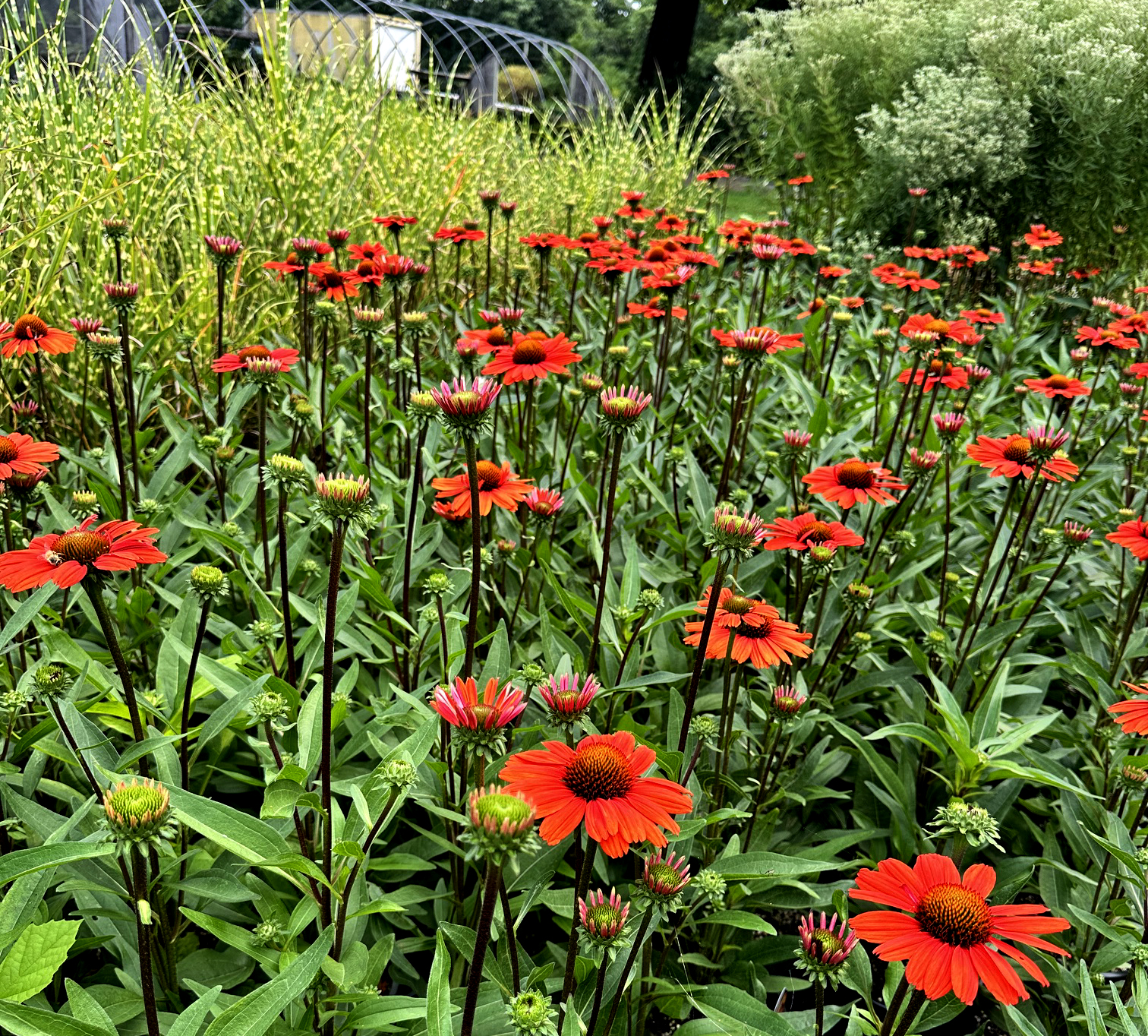
Pollinator gardens are becoming an increasingly important part of residential, commercial and institutional landscapes throughout New York and New England. Garden centers are expanding their native-plant selections while landscape professionals are being asked to create gardens that support bees, butterflies, moths and other beneficial insects.
A successful pollinator garden requires more than a collection of colorful flowers. Plant selection should provide reliable sources of nectar and pollen throughout the growing season while also supporting the complete life cycles of native insects.
Native perennials can play a central role in accomplishing both goals.
Native plants have developed alongside the insects, birds and other wildlife found within their natural regions. Their flowers can provide nectar and pollen while their foliage, stems and seeds may offer food, shelter, nesting material and overwintering habitat.
New York’s Department of Environmental Conservation notes that native plants are adapted to local climate and soil conditions and provide nectar, pollen and seeds for native wildlife. Once established in suitable locations, many native perennials also require less irrigation and maintenance than plants poorly matched to the region. New York State DEC
Native range still requires careful consideration. A plant described as native to the Northeast may not naturally occur in every part of New York. Landscape professionals should consider the project’s location, growing conditions and ecological objectives when developing a plant list.
One of the most important principles of pollinator-garden design is providing a continuous succession of flowers.
Cornell Cooperative Extension recommends planting a diversity of flowering species that bloom from spring through fall. A garden that looks spectacular for three weeks but offers little food during the remainder of the season will provide limited support for pollinators. Cornell Cooperative Extension
An effective plan should include early, middle and late-season flowering perennials.
Spring can be a difficult period for pollinators emerging after winter. Native perennials that may contribute early flowers include:
These plants can be especially useful in gardens that include part-shade areas, woodland edges or transitional spaces beneath deciduous trees.
Summer brings more flowering choices and generally greater pollinator activity. Appropriate selections may include:
Milkweeds are particularly important because they serve as larval host plants for monarch butterflies as well as nectar sources for numerous insects. Mountain mints can also attract a remarkable range of bees, wasps and other beneficial insects when planted in sunny locations.
Late summer and fall flowers are essential for migrating monarchs and insects preparing for winter. This period is sometimes overlooked in gardens designed primarily around spring and early-summer color.
Valuable late-season plants may include:
Goldenrods and asters are especially valuable because they extend the garden’s flowering season. They can also create a strong visual conclusion to a landscape that might otherwise begin to lose color in late August.
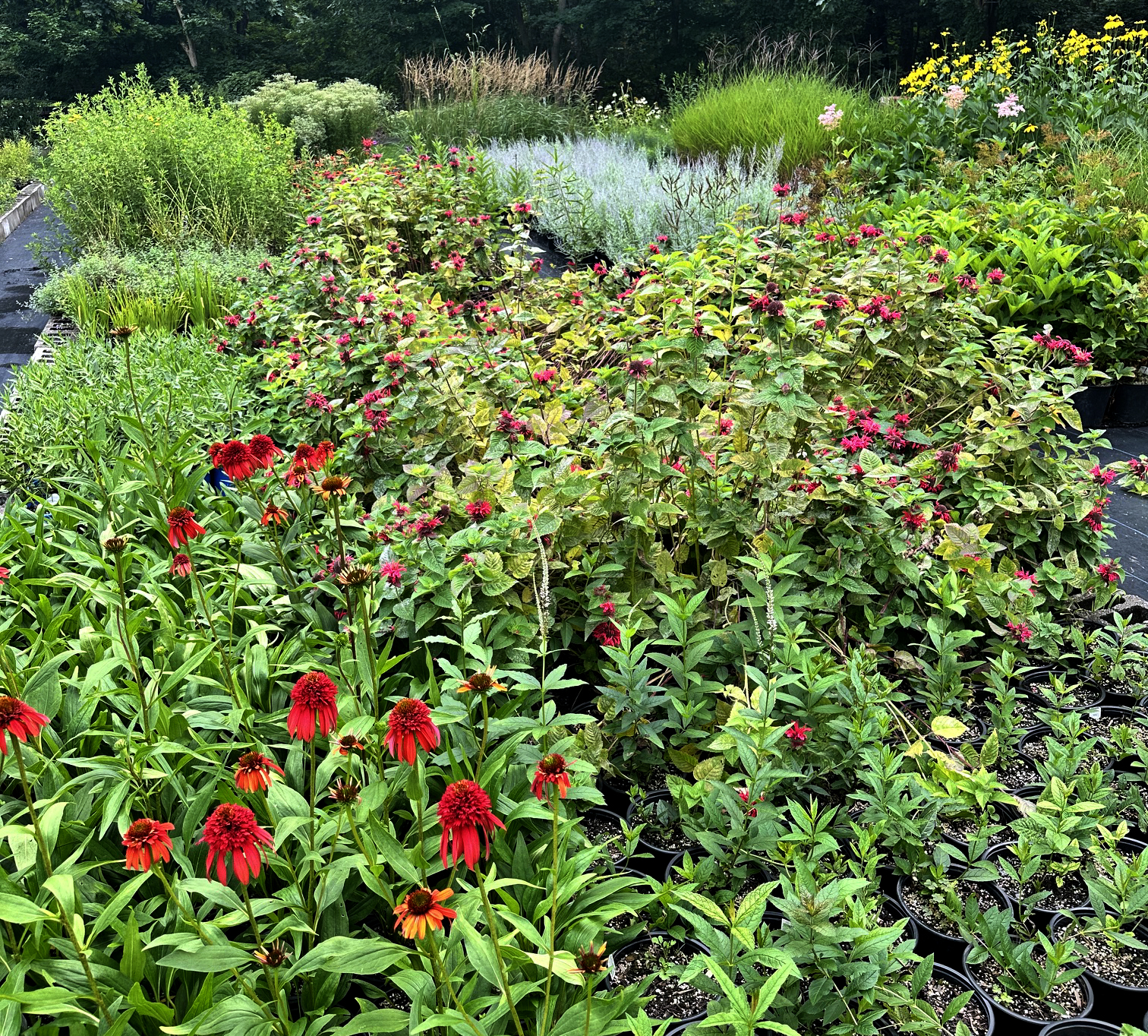
Pollinator gardens should be designed with both ecological function and visual order in mind. Planting several specimens of the same species together creates a more visible feeding destination than scattering individual plants throughout a large bed.
Repeating these groupings across a landscape can produce a deliberate, cohesive design while making nectar and pollen easier for pollinators to locate.
For commercial and institutional properties, defined masses of native plants can also communicate that the garden is intentional and maintained – an important consideration when introducing a more naturalistic planting style.
A native plant will not necessarily thrive in every location simply because it is native to the region. Light, soil texture, drainage, moisture and available space remain critical.
Butterfly weed generally performs best in sunny, well-drained conditions. Swamp milkweed is better suited to consistently moist soil. Blue wood aster can be useful in partial shade while many goldenrods perform most strongly in sun.
Choosing plants according to actual site conditions produces healthier growth, better flowering and a landscape that requires fewer corrective measures later.
A pollinator-friendly landscape can include native grasses and sedges as well as flowering perennials. These plants add structure, soften transitions and provide habitat that flowering plants alone may not supply.
Stems, seed heads and leaf litter also offer shelter and overwintering sites. When site requirements permit, leaving selected stems standing through winter and delaying spring cleanup can preserve habitat for insects that spend the colder months within plant material.
The Xerces Society notes that pollinator habitat should provide not only forage but also nesting and overwintering opportunities. Xerces Society
Both straight native species and cultivated selections of native plants (nativars) may have a place in professionally designed landscapes. Nativars can provide useful characteristics such as controlled height, improved disease resistance or a particular growth habit.
However, not every cultivated selection offers identical ecological benefits. Major changes in flower form, bloom accessibility, leaf color or other traits may affect how insects use the plant. When ecological function is the leading objective, straight species or nativars that retain the species’ principal characteristics may be preferable.
Behn’s Best Perennials is a wholesale nursery in Malden Bridge, New York serving garden centers, landscape professionals and property managers throughout Upstate New York, Western Massachusetts and Northwestern Connecticut.
Our locally grown, landscape-ready inventory includes native and garden perennials, ornamental grasses, ferns, vines and groundcovers selected for Northeast landscapes.
Plant varieties and quantities change throughout the season. Trade customers are invited to contact Behn’s Best Perennials for current availability and assistance selecting plants for pollinator gardens, commercial landscapes and other professional projects.
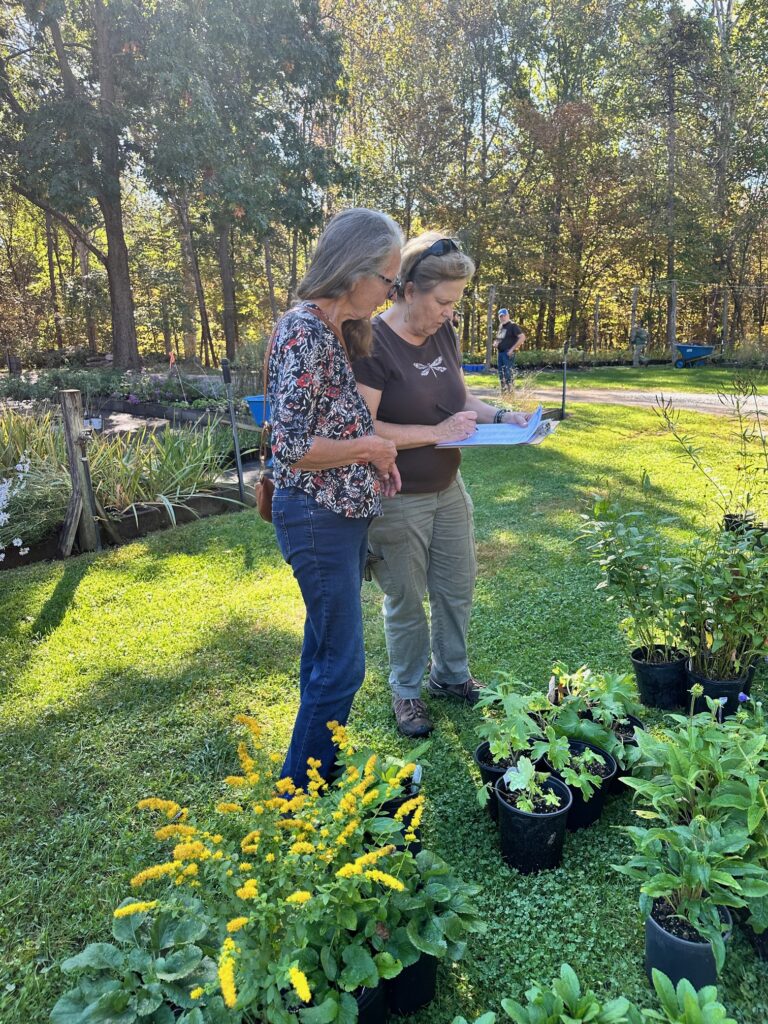
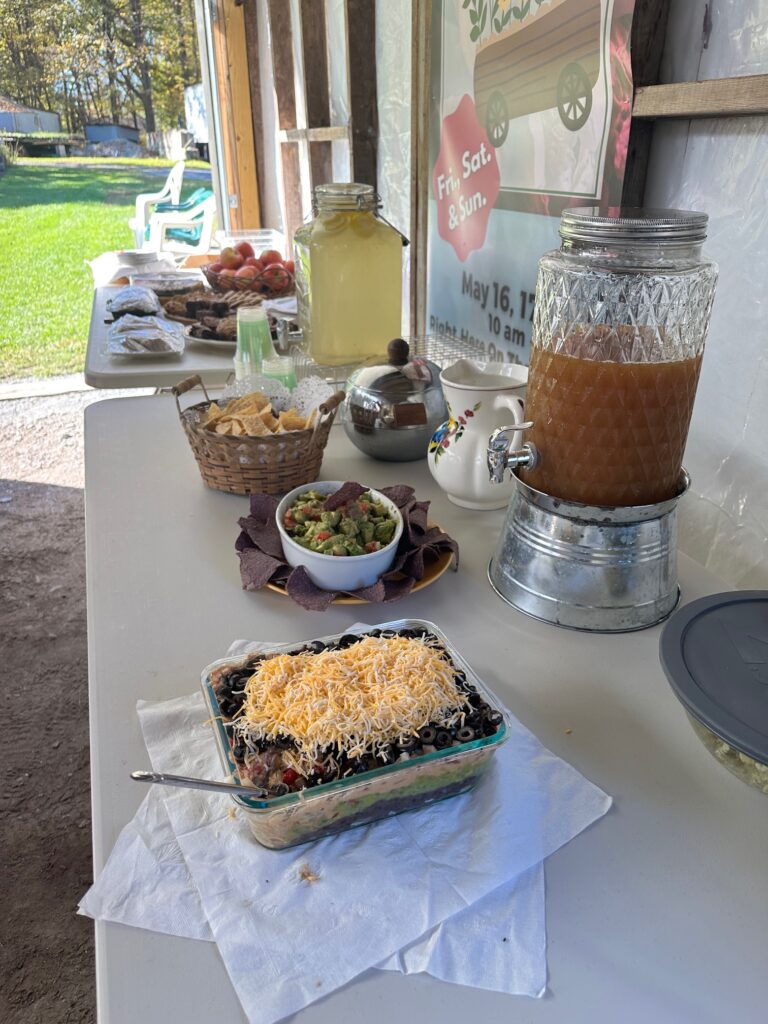
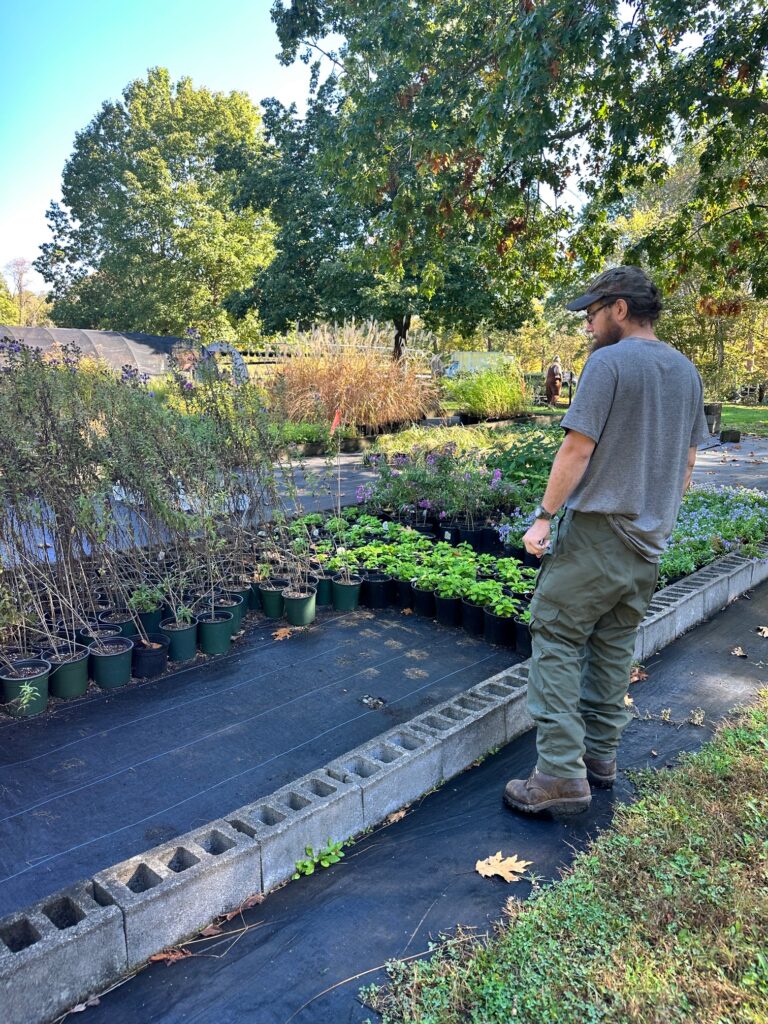
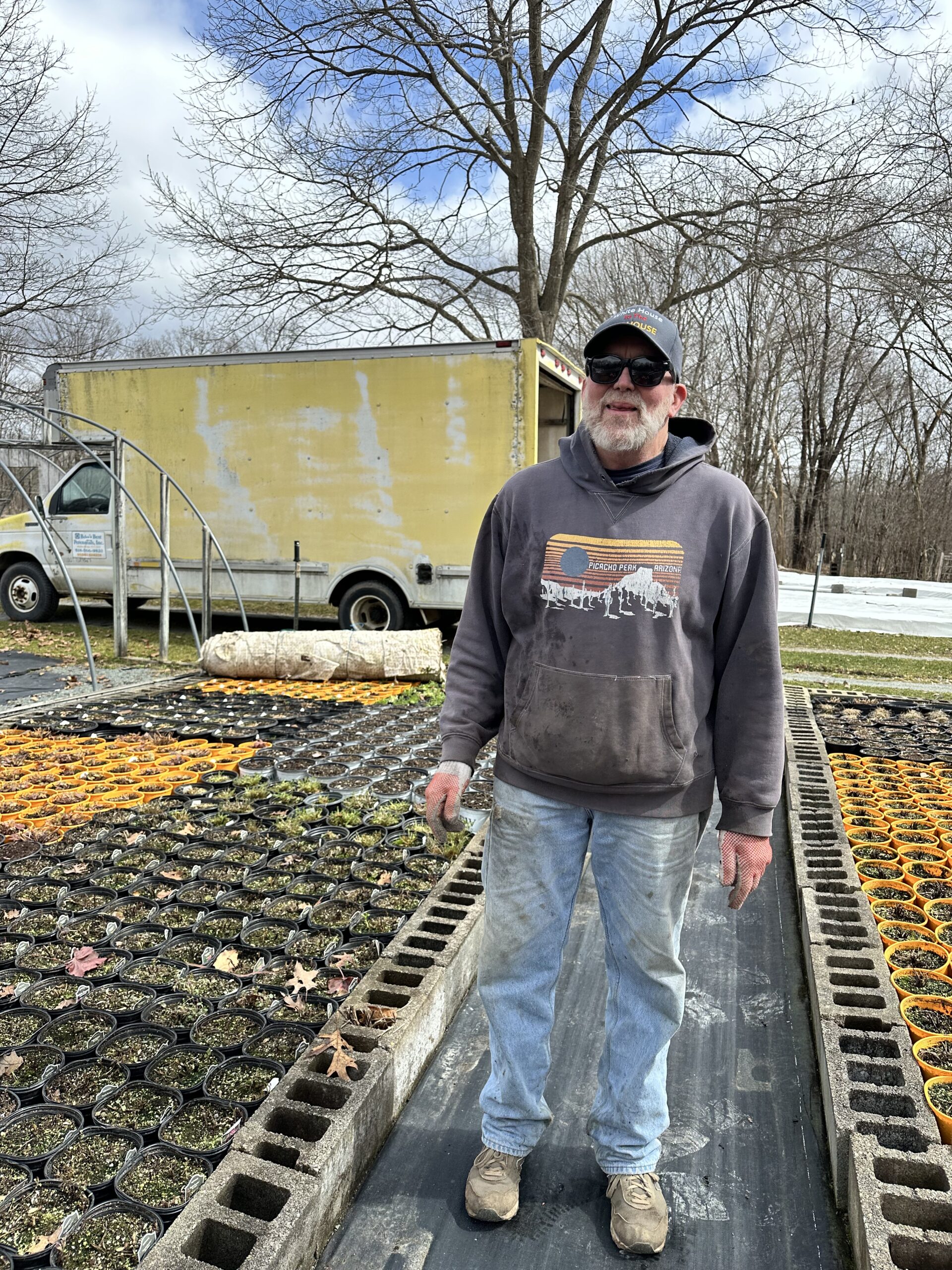
The welcome wagon is ready, the plants look great and we’re open for business. The corgis love rolling around in the dirt and they’re growing too.